
The day by day, hour by hour breakdown of our Moroccan adventure
Tangier, Asilah, Rabat
~~~
“We take photos as a return ticket to a moment otherwise gone.”
~~~
Months ago, when Spain felt like a million years away, my roommate and I talked about trying to plan a trip to Morocco for one of our free weekends during the program. We knew it would probably be impossible, but we dreamed anyway. Then, at one of our orientation sessions, our program director made our dream come true: they were building a trip to Morocco into the program for us! We were ecstatic, and ever since, we have been obsessing over Morocco Pinterest boards and excitedly anticipating our adventure. When it came time to actually go to Morocco, however, it felt completely surreal and shocking. We couldn’t believe we were actually going, after our months of anticipation. I was afraid that I had hyped it up too much in my mind and that I might be disappointed, but it completely exceeded my expectations in every way possible.

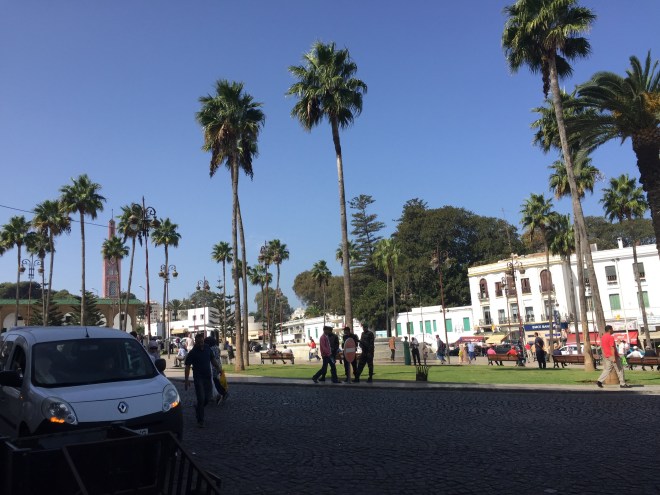
We left from our hotel in Sevilla and took a bus ride to Tarifa, where we met our program directors, Sarah and Marissa. We went through security and got our passports stamped, and then got on a massive boat. On the boat, we talked about our itinerary and took surveys about our expectations for the trip. We got our passports stamped again, and after 45 minutes, arrived in Tangier. Getting off the boat was surreal. My friend Valerie and I stepped off at the exact same time, together, because we couldn’t believe we were in Africa for the first time. The whole thing was a bit of a blur. We met up with our bus driver (I can’t remember his name, but he was extremely friendly and a very skilled driver, and he spoke like 5 languages) and drove into Tangier. We exchanged money and took a walk through a food market, which was a very overstimulating experience. There were chickens hanging by their feet with their heads cut off, and the heads displayed right beneath them, every type of fish you can imagine, heads of various livestock, as well as live chickens waiting to be slaughtered. It was very smelly, crowded, and overwhelming. Moroccans have a deep appreciation for fresh, natural food, so it was really amazing to experience.
Fun fact: Organic food in Morocco is cheaper than buying McDonalds!

After the market, we made our way to the DARNA Women’s Center. DARNA is a place where women and children can find help and support of all types, from legal to medical to professional. They support women entrepreneurs, teach women and children crafts like sewing and weaving, and provide safety for a woman who has been abused, abandoned, etc. They have a restaurant in their building to help fund their organization, which is where we ate lunch. We sat with three university students from Tangier and discussed differences between our cultures, governments and religions, and addressed stereotypes about our respective countries. The girls all spoke perfect English, which is something we would encounter a lot on this trip, and something that made me a million times more motivated to become bilingual. The girls asked us about our healthcare system, and they were shocked that birth control was something that the government was trying to take away. In Morocco, you can walk into any pharmacy and buy birth control extremely cheaply over the counter. They also asked what it was like living in a country with so many guns, which was an intense conversation. Guns are prohibited in Morocco, and even the police often have empty pistols that they simply use to display power. In Morocco there are a lot of police visible on the streets, but we learned that this was simply to remind people that the police are there watching over people. There is a huge secret police system in place; in fact, Morocco has one of the most advanced intelligence agencies/systems in the world. They have extremely low crime rates, and it is one of the safest countries to visit. We are actually much more likely to be pickpocketed in Spain than in Morocco, because the people of Morocco have a mindset that it is their responsibility to all look out for each other and protect one another.
We asked the girls a bit about Islam, because one of the girls was wearing a Hijab while the other two were not, even though they all identified as Muslim. They told us that wearing a Hijab is just a personal choice, and it does not make you a “bad” Muslim for not wearing one. They taught us about Islamic holidays and customs, which was amazing to learn about. After a delicious lunch of soup and chicken tagine, they showed us around the center. They took us to a classroom and showed us how to write each of our names in Arabic, which was incredibly interesting because I have never understood how written Arabic works. You read it right to left, and the lines represent consonants and dots represent vowels. Each sound in a word is assigned a character, whereas in English we assign a specific sound to each letter.


Sadly, we didn’t have much time in Tangier, and after DARNA, we began a four-hour bus ride towards Rabat. We drove along the Atlantic coast, and we all fell asleep. When we woke up, we had stopped on the side of the road, right on the beach, our program director Sarah exclaimed, “Who’s ready to ride a camel?!” We were all really disoriented since we had just woken up, and riding camels wasn’t part of our itinerary, so it was a bit shocking. But sure enough, when we looked out the window, there were five camels on the beach, just chilling.


It was the best possible surprise. We ran down the beach (which was extremely polluted) and greeted our camels, which were absolutely adorable. The first four people in our group went, and then Valerie, Connor, Diego and I went. Getting on and off were definitely the hardest parts. You have to hold on for dear life, because it leans super far forward and then super far back when it is standing up. Once up, though, it was pretty effortless. It was actually much smoother and more comfortable than riding a horse, in my opinion. We only rode for about five minutes, just along the beach, but it was incredible, definitely a highlight of the trip.


Just two minutes down the road from where we rode the camels was the city of Asilah. We walked through the Medina (old town), which was picturesque. The buildings were all white and blue, and covered in beautiful murals.


We stopped at a community oven, which was a little house that has been in this man’s family for 300 years. Community ovens are all over Morocco, apparently. Women prepare dough (or whatever they want to bake) at home, and then bring it to the community oven to be baked. It was kind of like a big brick pizza oven, and everything in it gets cooked to perfection. We got to try freshly baked bread and Kalinté, a traditional Moroccan dish made of chickpeas, water, salt and cumin. It was one of the best things I’ve ever had, probably because it was literally baked right in front of me.

After exploring Asilah, we drove for another few hours until we finally reached Rabat. We met our host families, who we stayed with for two nights. I was with two other girls from my group, Maddie and Alexis, and our host family consisted of a mother and two daughters. Only one of the daughters spoke English. Our house was in the Medina of Rabat, and it was pretty spectacular. When you walk through the door you’re standing in an indoor courtyard, and the house was three stories tall, so you could see all the way up to the top, where the roof was completely made of glass. The floor and walls were covered in intricate mosaic tile. Along the four sides of the “courtyard” were long rooms. The room the three of us stayed in made up one of the walls of the courtyard. It was long and skinny, like a bowling ally, and had couches along all of the walls. It was the most gorgeous room I’ve ever seen.


We made ourselves comfortable, then had dinner with our family. They made us a chicken dish with apricots that had cinnamon and other spices, and it was incredible. The bathroom/shower situation was not the best, but we made do. We were lucky enough to have a western toilet, which we were very thankful for. The shower was cold and was only hand held, and the water barely drizzled out, so you had to hold it basically on your head to get the shampoo out. There were also quite a few spiders to keep you company while bathing. It wasn’t the best experience, but it could’ve been worse. We went to bed at around 10pm that night because we were so exhausted.
The next day, we woke up for breakfast with our families, which consisted of three different types of bread-like pastries, with jam and butter. We met the rest of the group at the meeting spot, which was at the end of the little ally that our house was in, and we drove to the Mausoleum of Kind Mohammed V. It was an extremely impressive monument from the outside, and even more so on the inside. It was crazy looking at the tomb that holds the actual body of the past King of Morocco.


After we spent some time there, we got back on the bus and went across the river, to the city of Salé. We went to an NGO that provides free after school programs for kids, and it was given to the city by King Mohammed VI. There, we used an empty classroom to have a discussion with students from the University of Rabat. We talked a lot about the Las Vegas shooting, and we described to them what it’s like living in a country with literally no gun control. We told them how much safer we feel in Spain and Morocco than in the States, and they were shocked. We talked about cheating, nepotism and corruption in the Moroccan education system and government, about our healthcare systems, religion, and lots of other topics. It was so interesting talking to them and hearing their perspective on American issues. We talked to them for a while, and then went to see some ancient Roman ruins in Rabat. We had lunch with our host families, and after lunch, the same students from earlier took us all on a walk through the Medina and then to a restaurant for tea. We hung out with them for a few hours and talked, and they were so cool. We are going to try to keep in touch with them after the program ends.
A couple annoying things about Morocco: women must dress very conservatively. Even in the blistering heat, we had to be totally covered; long, loose pants, shirts that covered our shoulders and chests, etc. It is considered very strange for women to walk around at night, because there is no reason for her to be out. It is assumed that if a woman is out alone at night, without a man, that she us up to no good, and that is a poor reflection on her family’s reputation. Additionally, coffee shops and cafés are only for men. It is EXTREMELY uncommon to see a woman in a coffee shop. Our group stopped at one during one of our drives, and the men were staring at us the entire time, looking confused and a bit peeved. You could feel them staring at you when you walked by and passed them; it was definitely uncomfortable. The cat calling was also annoying, but it never made me feel unsafe.
We went back to our houses, and then everybody actually came and gathered in the house that I was staying in. Sarah, Marissa, and a man named Nate gave us a talk about Peace Corps, Fulbright, and teaching English abroad. Sarah and Marissa both did Peace Corps in Morocco years ago, and just ended up staying. It was amazing hearing about their experiences, and really inspirational. It made me question my “5 year plan” for after graduation and start to seriously consider doing something like teaching abroad. We asked them if they plan on living to the United States again, and all of them said no.
The craziest part of the trip came in the evening: we went to a public bath house, called the Hammam. Obviously, the guys and girls went to separate ones. The six of us went with Jemma and Valerie’s host sister, and she showed us how it works. We got there and paid 50 dirham (about 5 euro) to get professionally scrubbed, and we were all super nervous and uncomfortable, but we knew it was the type of experience you can’t pass up. We undressed, so all we were wearing were shorts, and went up to the bath. It was a large room with faucets everywhere, and we picked a corner and sat down. One of the women who works there filled up massive buckets of hot water for us and gave us things to scoop the water with. It was like a sauna in there, it was so so hot. We washed our hair, and one by one, the woman took us to get scrubbed. She literally scrubs every square inch of you. She rubbed this brown glop all over my body, and then took an exfoliating glove and went to town. She scrubbed me so hard that my skin was bright red afterwards. It hurt, but it only lasted about 5 minutes, and my skin has never felt so soft. I was completely covered in dead skin, and it took a while to rinse it all off. Women in Morocco typically go to a bath house twice a week, and they have much fewer wrinkles and skin problems, because they take such good care of their skin. We were there for about an hour in total, until we couldn’t bear the heat anymore. It was one of the craziest cultural experiences I’ve ever had, and it definitely makes for a good story. After the baths we were exhausted, so we went home and fell asleep right after dinner.
The next day we said goodbye to our host families and began our drive to the Rif Mountains. Fun Fact: The Rif Mountains are Europe’s largest supplier of marijuana, and the term “reefer” comes from the Rif Mountains.
I’m going to put the last part of our trip in a separate post, because there is too much to write!
 Idly Wild